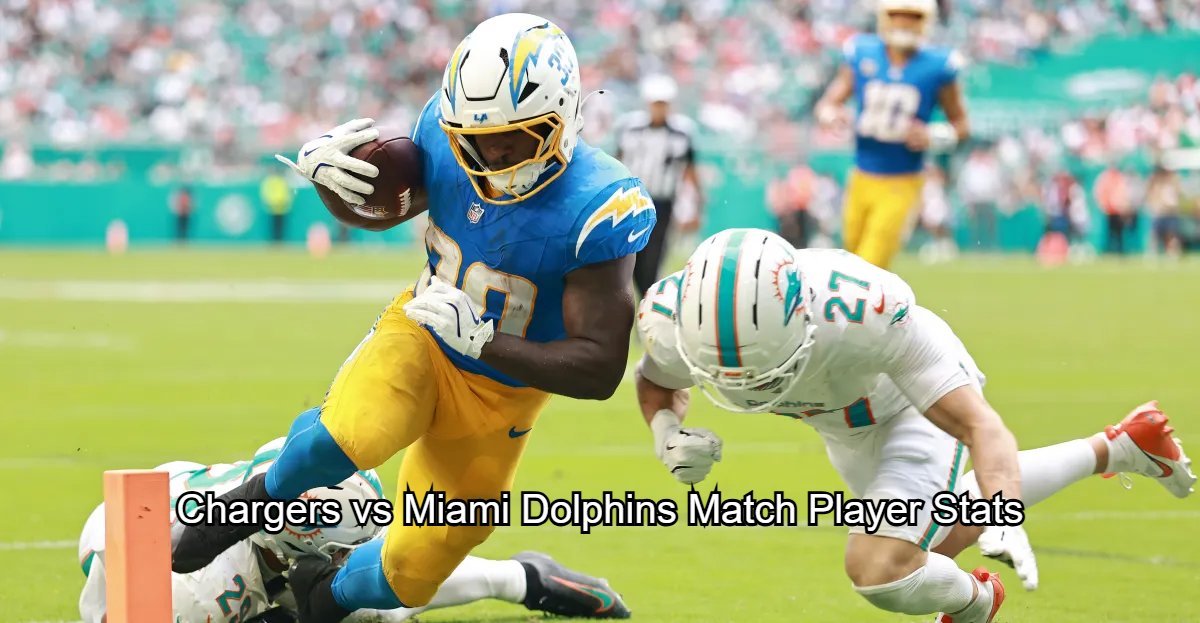
When fans search for “chargers vs miami dolphins match player stats,” they are usually looking for more than just a final score. They want to understand who controlled the tempo, which quarterback delivered under pressure, how the defensive units responded, and which individual performances truly shaped the outcome.
Whenever the Los Angeles Chargers face off against the Miami Dolphins, the matchup often becomes a showcase of offensive firepower. Both franchises have leaned heavily on explosive passing attacks in recent seasons, making their statistical comparisons particularly compelling.
In this article, we will break down key player statistics, positional battles, offensive efficiency, defensive impact, and special teams contributions. Instead of simply listing numbers, we will interpret what those numbers actually mean on the field.
Quarterback Showdown: Passing Yards, Efficiency, and Decision-Making
At the center of any Chargers vs Miami Dolphins Match Player Stats matchup is the quarterback duel. When Justin Herbert lines up opposite Tua Tagovailoa, fans can expect a dynamic contrast in styles.
Herbert is known for his arm strength and ability to stretch the field vertically. In high-profile matchups between these teams, he has frequently posted passing totals exceeding 300 yards. His completion percentage often hovers around the mid-to-high 60s, but what stands out is his yards per attempt, which reflects aggressive downfield targeting. When he keeps interceptions low and maintains a touchdown-to-interception ratio above 2:1, the Chargers’ offense tends to flourish.
Tagovailoa, on the other hand, thrives on rhythm and timing. His quick release and anticipation make him particularly effective in short-to-intermediate routes. In games against the Chargers, he has demonstrated strong efficiency metrics, including completion rates often above 65 percent and high passer ratings when protected effectively. His success frequently correlates with clean pocket conditions and a well-executed run-pass balance.
From a statistical perspective, Chargers vs Miami Dolphins Match Player Stats performance in this matchup often determines time of possession and red-zone efficiency. Even a slight difference in third-down conversion rate can swing momentum dramatically.
Wide Receivers and Explosive Plays
Quarterback Chargers vs Miami Dolphins Match Player Stats rarely tell the full story without analyzing receiving production. For the Chargers, top targets typically include elite route runners and vertical threats capable of generating chunk plays of 20 yards or more.
When facing Miami’s secondary, Chargers receivers often accumulate substantial yardage after the catch. Yards after catch (YAC) is a critical metric in this matchup, especially when Miami deploys zone coverage. Receivers who can find soft spots between defenders frequently post 100-plus yard performances in these contests.
On the Dolphins’ side, speed is a defining characteristic. Miami’s offensive identity revolves around stretching defenses horizontally and vertically. Receivers routinely record high yards-per-reception averages, sometimes exceeding 15 yards per catch. Big-play touchdowns can drastically inflate stat lines, turning what appears to be a balanced game into an explosive shootout.
From a statistical analysis standpoint, the key metric to monitor is explosive pass plays—receptions of 20+ yards. In recent matchups, the team that Chargers vs Miami Dolphins Match Player Stats more explosive plays typically dictates the tempo and forces defensive adjustments.
Running Game Contributions and Efficiency Metrics
Although this matchup often Chargers vs Miami Dolphins Match Player Stats passing numbers, the ground game plays a pivotal supporting role. Rushing attempts, yards per carry, and red-zone rushing touchdowns significantly influence overall offensive balance.
For the Chargers, running backs often serve dual purposes: traditional handoffs and check-down receiving options. A back averaging above 4.5 yards per carry forces Miami’s defense to respect play-action, opening deep passing lanes. Additionally, total scrimmage yards (rushing plus receiving) provide a better measure of impact than rushing yards alone.
Miami’s rushing attack typically emphasizes speed and misdirection. Outside-zone runs and motion-based schemes can produce substantial gains when executed properly. If Dolphins running backs surpass 100 combined rushing yards as a unit, it usually indicates effective offensive balance and reduced pressure on Tagovailoa.
In statistical evaluations, red-zone rushing efficiency becomes particularly important. Converting short-yardage situations into touchdowns instead of field goals often defines the margin of victory in tightly contested games.
Defensive Standouts: Tackles, Sacks, and Turnovers
Offensive fireworks may Chargers vs Miami Dolphins Match Player Stats headlines, but defensive statistics often determine outcomes. For the Chargers, edge rushers and interior linemen are key to disrupting Miami’s timing-based offense.
Sack totals are a major indicator of defensive effectiveness in this matchup. When the Chargers generate multiple sacks and quarterback hits, it typically disrupts Tagovailoa’s rhythm and reduces his completion percentage. Pressures that force hurried throws often lead to tipped passes or interceptions.
The Dolphins’ defense, meanwhile, relies on aggressive blitz packages and disguised coverages. Interception numbers and pass deflections frequently rise when Miami successfully confuses Herbert pre-snap. A multi-turnover performance can dramatically swing possession statistics.
Total tackles, while important, do Chargers vs Miami Dolphins Match Player Stats always reflect impact. Impact plays—such as third-down stops, forced fumbles, and red-zone takeaways—carry far greater statistical weight in determining game flow.
Third-Down Conversions and Red-Zone Efficiency
Beyond individual Chargers vs Miami Dolphins Match Player Stats, situational metrics often tell the deeper story. Third-down conversion percentage is one of the most revealing numbers in any Chargers vs Dolphins matchup.
If the Chargers convert more than 45 percent of third downs, it usually signals sustained drives and defensive fatigue for Miami. Herbert’s ability to find receivers in tight coverage on third-and-medium situations becomes critical here.
Conversely, when the Dolphins maintain high third-down efficiency, it often reflects effective pre-snap motion and play design. Sustained drives not only increase scoring opportunities but also limit the opposing offense’s possessions.
Red-zone touchdown percentage is another decisive metric. Settling for field goals instead of touchdowns can shift momentum, especially in high-scoring games where every possession matters.
Special Teams Impact and Hidden Yardage
Special teams Chargers vs Miami Dolphins Match Player Stats are frequently overlooked, yet they can significantly influence the final result. Field goal accuracy, punt return yardage, and kickoff field position all contribute to hidden yardage.
A kicker converting all attempts, particularly from beyond 45 yards, adds stability in close contests. Meanwhile, punt return averages above 10 yards can consistently provide favorable starting field position.
Hidden yardage often shows up in average starting field position metrics. If one team consistently begins drives beyond its own 30-yard line while the other starts inside the 20, the statistical advantage becomes clear over four quarters.
Turnover Margin and Time of Possession
Two overarching statistical Chargers vs Miami Dolphins Match Player Stats—turnover margin and time of possession—often summarize the story of the game.
A positive turnover differential of +2 or greater typically correlates strongly with victory. Interceptions, fumble recoveries, and strip sacks directly influence scoring opportunities.
Time of possession, while not always decisive in shootouts, can reveal which team controlled pacing. If one offense sustains long drives exceeding eight plays on average, it often indicates dominance in the trenches and efficient play-calling.
In Chargers vs Dolphins games, explosive scoring sometimes minimizes possession disparities. However, in closely contested matchups, possession balance frequently becomes the difference.
Overall Statistical Trends in Chargers vs Dolphins Games
Historically, matchups Chargers vs Miami Dolphins Match Player Stats these teams have leaned toward high offensive output. Combined passing yards often exceed 600 yards, reflecting quarterback-centric strategies.
Explosive plays, quick scoring drives, and significant yardage totals define the statistical landscape. Defensive adjustments typically determine second-half outcomes, as both coaching staffs adapt to early-game tendencies.
Individual player stats—particularly from quarterbacks and top Chargers vs Miami Dolphins Match Player Stats—tend to dominate headlines. However, deeper metrics such as pressure rate allowed, yards per play, and red-zone efficiency ultimately shape the final score.
Final Thoughts: What the Player Stats Really Reveal
When analyzing “chargers vs miami dolphins match player stats,” it becomes clear that numbers alone do not tell the entire story. Context matters. A 300-yard passing game in a shootout carries different weight than 250 yards in a defensive battle.
The quarterback duel between Justin Herbert and Tua Tagovailoa often anchors the statistical narrative, but complementary performances from receivers, running backs, and defensive playmakers determine whether those numbers translate into victory.