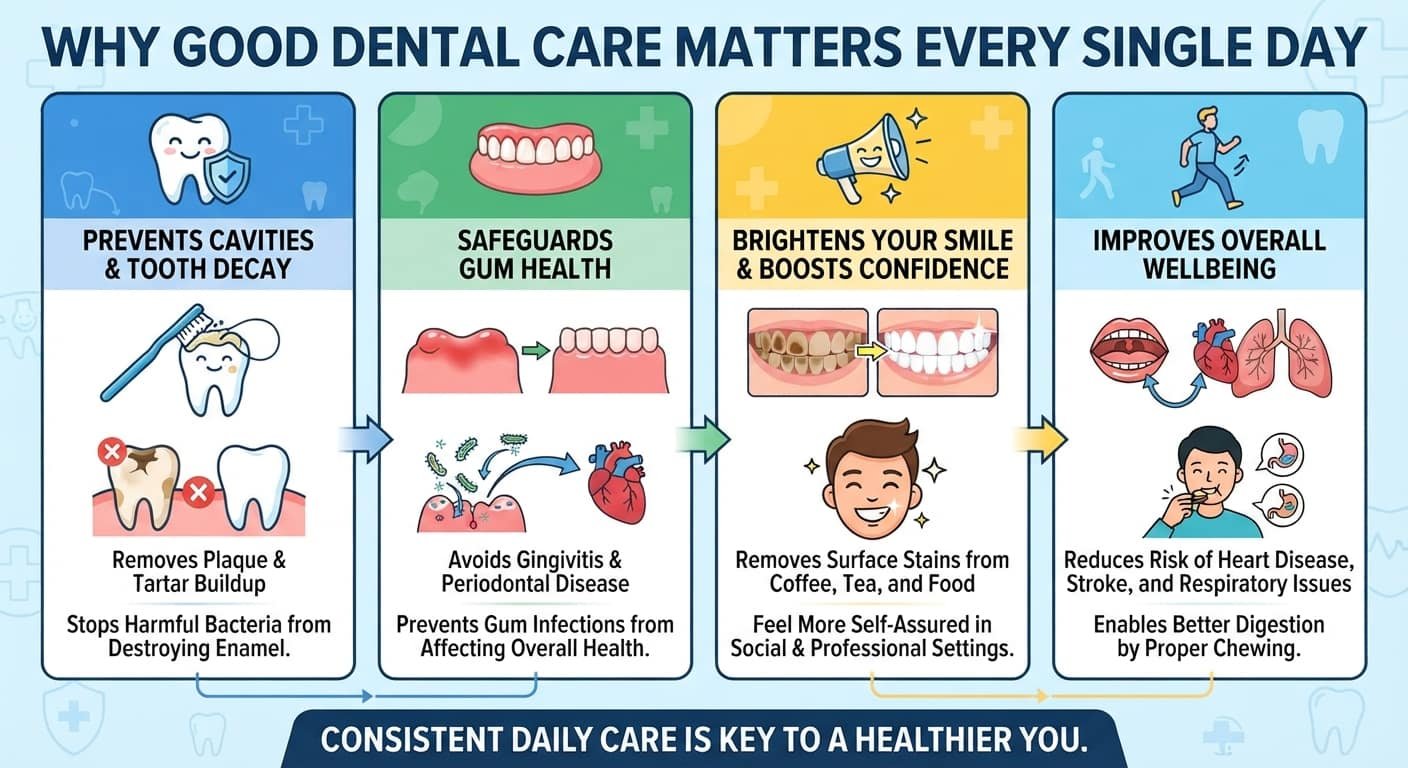
Learn simple Good dental care tips to keep your teeth strong and bright. Discover easy daily habits for a healthy smile that lasts a lifetime.
Good dental care is the secret to a happy and healthy smile. When you take care of your teeth every single day, you stop nasty little bugs from hurting them. Think of your teeth like tiny white castles in your mouth. Every time you eat something sweet or sticky, tiny invisible monsters try to break down the walls. Brushing and flossing act like your trusty shield and sword, keeping those bad germs far away. Without proper dental care, your teeth can get sad, weak, and very sore. Nobody likes a toothache because it makes eating your favorite ice cream or crunchy apples way too hard. By starting good habits right now, you make sure your smile stays bright and strong for many years. It only takes a few minutes each day to protect your pearly whites. Let us explore how simple it is to build an awesome dental routine that actually works for you and your whole family.
The Magic of Brushing Your Teeth the Right Way
Brushing your teeth is the very first step in great dental care. But did you know there is a special way to do it? You should never scrub your teeth like you are trying to clean a dirty floor. Instead, hold your toothbrush gently at a small angle against your gums. Move the brush in tiny circles, making sure to visit every single tooth. Do not forget to brush the front, the back, and the chewing tops where food loves to hide. Dentists always say you need to brush for a full two minutes. You can sing your favorite song or hum a little tune while you brush to make the time fly by. Always use a soft-bristled toothbrush because hard bristles can hurt your gentle gums. Changing your toothbrush every three months keeps your dental care routine fresh and super effective. A clean brush means cleaner teeth and a much happier mouth every single morning.
Why Flossing Is Your Teeth’s Best Friend
Toothbrushes are amazing, but they cannot reach every tiny space between your teeth. That is where flossing comes in to save the day. Flossing is a super important part of dental care because it pulls out hidden food pieces. If food stays stuck between your teeth, it turns into a sticky stuff called plaque. Plaque loves to make your gums red, puffy, and very angry. When you slide a piece of dental floss gently between your teeth, you sweep away those hidden troublemakers. You only need to floss once a day, right before bed time, to keep your gums safe. It might feel a little tricky at first, but your fingers will get used to it very fast. Think of flossing like cleaning up the tiny corners of your room where your broom just cannot reach. Adding this quick habit to your dental care plan makes your dentist smile during your next checkup.
Choosing the Right Toothpaste and Toothbrush
Walking down the grocery aisle can feel super confusing with so many toothpastes and toothbrushes to choose from. For great dental care, always look for toothpaste that has fluoride in it. Fluoride acts like an invisible superhero cape that makes your tooth enamel extra hard and strong. If you love bright flavors, pick a mild mint or a yummy fruit flavor that makes brushing fun. When choosing a toothbrush, remember that soft is always better than hard. Electric toothbrushes are also a super cool choice because they do a lot of the spinning work for you. They have built-in timers that let you know exactly when your two minutes are up. No matter which tools you pick, the most important part is using them every single day. Good dental care equipment makes taking care of your teeth feel like an easy daily adventure.
Foods That Make Your Smile Strong and Healthy
What you eat plays a massive role in your everyday dental care journey. Crunchy vegetables like carrots, celery, and crisp apples act like natural scrubbers for your teeth. When you chew them up, they help clean away leftover food bits while giving your jaw a workout. Dairy products like milk, cheese, and yogurt are packed with calcium and other minerals. These nutrients build rock-solid teeth and keep your bones strong and healthy all year long. Drinking plenty of plain water is also one of the best dental care habits ever. Water washes away sugary acids and keeps your mouth nice and wet so germs cannot grow. Eating a colorful plate full of healthy foods keeps your body energized and your smile sparkling bright. Good food choices are truly the tasty fuel behind every great dental care routine.
Foods and Drinks to Avoid for a Cavity-Free Smile
Some foods are super yummy, but they are total enemies of good dental care. Sticky candies, chewy gummies, and sweet fruit snacks love to glue themselves to your teeth. Because they stick around for a long time, they give germs a giant feast to enjoy. Sugary sodas and sweet juices bathe your teeth in acid, which eats away at your protective enamel. If you do enjoy a sweet treat every once in a while, try to drink water right after. This quick trick washes away the sugar before it can cause any trouble. You do not have to give up all your favorite treats forever, but balance is key. Saving sugary snacks for special occasions keeps your dental care goals right on track. Your teeth will definitely thank you for choosing water and crunchy snacks over sticky candy.
Visiting the Dentist Without Any Fear
Going to the dentist can feel a little scary if you do not know what to expect. But true dental care includes regular visits to your friendly neighborhood dentist. A dentist is basically a smile doctor whose main job is to keep your teeth healthy. They have special mirrors and funny-looking tools to count your teeth and check for tiny cavities. Most of the time, a dental checkup is just a quick cleaning that leaves your mouth feeling extra minty. If you visit the dentist every six months, they can catch small problems before they turn big. Think of it like taking your bicycle to the repair shop for a quick tune-up. Building a good relationship with your dentist makes your dental care journey completely stress-free and easy. You walk out of the clinic with a sparkling clean smile and a big boost of confidence.
Building a Consistent Morning and Night Routine
Consistency is the absolute magic ingredient for successful dental care. Setting up a solid morning and night routine makes taking care of your teeth effortless. In the morning, brush your teeth after breakfast to clear away overnight sleep germs. At night, brush and floss before you go to sleep so no food lingers. Never skip your bedtime routine, because your mouth makes less saliva while you sleep. Saliva helps protect your teeth, so nighttime germs have an easier time causing trouble. Putting a colorful chart on your bathroom wall can help you track your daily dental care habits. Reward yourself with a sticker every time you complete your morning and night steps successfully. Soon enough, these healthy habits will feel as natural as tying your shoes or washing your hands.
Teaching Kids Early Habits for Lifelong Dental Health
Starting dental care early in life sets children up for a lifetime of healthy smiles. Parents can clean a baby’s gums with a soft, damp cloth even before teeth appear. As soon as the first little tooth pops up, it is time for a tiny baby toothbrush. Making toothbrushing a fun game with songs and silly faces helps kids look forward to it. Let children pick out their own fun-colored toothbrushes with their favorite cartoon characters on them. Teaching them to spit out the toothpaste instead of swallowing it is another important milestone. By making dental care a joyful family activity, kids learn to take pride in their hygiene. These early lessons grow into lifelong habits that prevent cavities and expensive dental bills down the road. A healthy childhood smile is the wonderful foundation for a bright adult future.
Common Dental Myths You Should Stop Believing
There are so many funny myths floating around about dental care and teeth. One big myth is that baby teeth do not matter because they just fall out anyway. Actually, healthy baby teeth hold the right spaces for your permanent adult teeth to grow. Another common myth is that if your gums bleed when you brush, you should stop flossing. Bleeding gums usually mean you need to floss more often, not less, to remove hidden germs. People also think that white teeth are automatically healthy teeth, but color does not tell the whole story. Strong enamel and healthy gums are much more important than just having a super bright shade. Knowing the real facts helps you take charge of your dental care without any confusion. Always trust advice from real dental professionals over old stories you hear online.
Conclusion
Taking charge of your dental care is one of the easiest ways to boost your overall health and confidence. By brushing twice a day, flossing regularly, and eating healthy foods, you protect your smile from everyday germs. Remember that small daily habits add up to massive results over time. Do not wait for a toothache to start paying attention to your precious pearly whites. Schedule your regular checkups, keep your routine fun, and enjoy showing off your bright smile to the world. Start your improved dental care journey today and watch how much happier your mouth feels!
Frequently Asked Questions
How many times a day should I brush my teeth?
You should brush your teeth two times every single day. Brush once in the morning and once right before you go to bed.
Why is flossing just as important as brushing?
Flossing cleans the tight spaces between your teeth where your toothbrush bristles cannot reach. It removes hidden food and stops sticky plaque from forming.
How often should I replace my toothbrush?
You should get a brand new toothbrush or electric toothbrush head every three months. Worn-out bristles do not clean your teeth properly.
Can what I eat affect my teeth?
Yes, sugary and sticky foods feed bad germs that cause cavities. Crunchy vegetables, dairy, and water help keep your teeth strong and clean.
What should I do if my gums bleed when I floss?
Bleeding gums usually mean you have some inflammation or need to floss more gently and regularly. If the bleeding does not stop, ask your dentist for advice.
How often should I visit the dentist for a checkup?
You should visit your dentist for a routine cleaning and checkup every six months. Regular visits help catch small problems before they become painful.