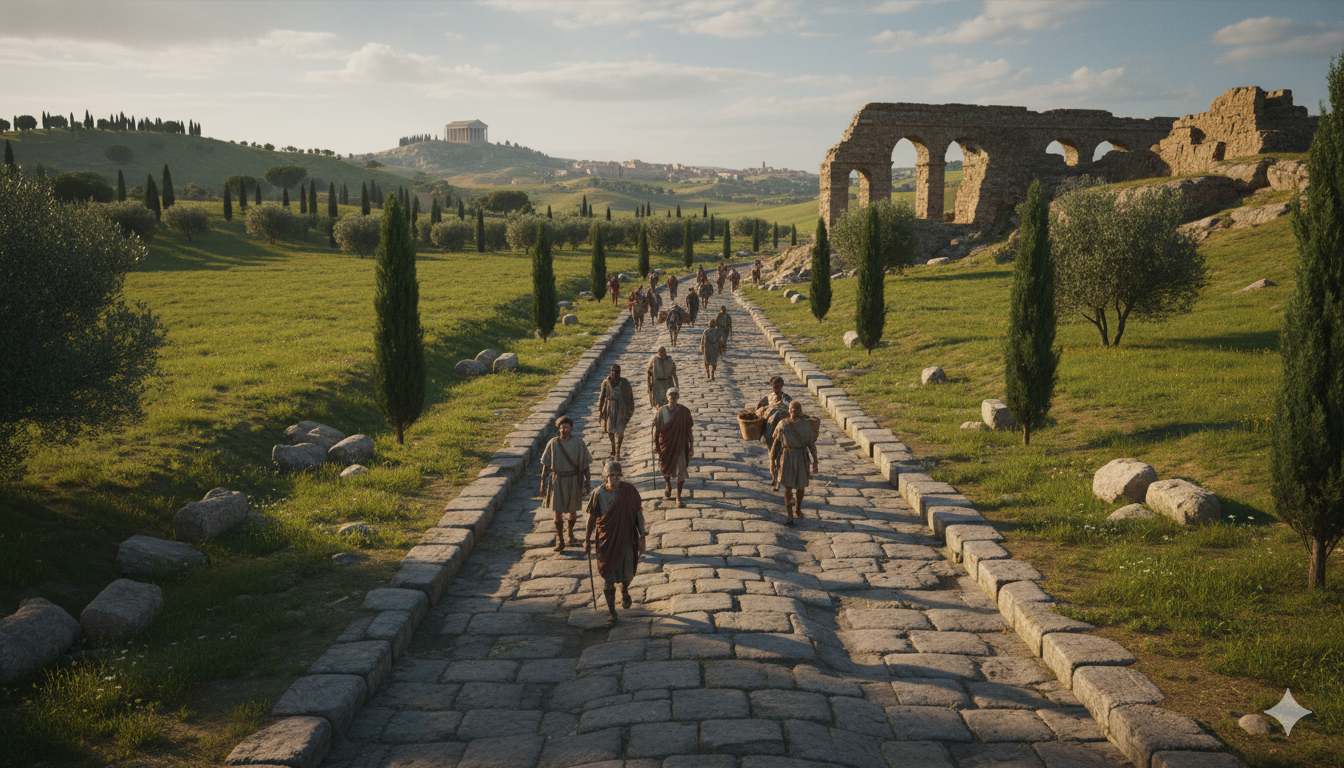
Have you ever wondered about the famous paths that people talk about in history? One of the most interesting ones is the cesta roman. In many languages, this name refers to a Roman road or a specific journey through ancient history. These roads were built very strong so that soldiers and traders could move across the land easily. When we talk about a cesta roman today, we are looking at a bridge between the past and the present. It represents more than just dirt and stones. It represents how people stayed connected thousands of years ago.
Understanding this topic helps us appreciate how much work went into building our world. The Romans were masters at making things last a long time. They used layers of rocks and sand to make sure their paths stayed smooth. Even after hundreds of years, you can still see parts of these roads in many countries. It is like a giant puzzle that tells us where people used to go. Learning about a cesta roman is like taking a step back in time to see how our ancestors traveled.
The History Behind the Ancient Roman Road System
The history of the cesta roman starts a very long time ago in Rome. The leaders of Rome wanted to make sure their army could reach any city quickly. To do this, they built thousands of miles of roads. Each cesta roman was designed to be as straight as possible. They did not like to go around hills if they could go over them. This made travel much faster for everyone. They used special tools to measure the land and make sure the road was level for horses and wagons.
These roads were the first real highway system in the world. They connected big cities to small villages. Because of the cesta roman, people could trade silk, spices, and metals across long distances. It also helped news travel faster. A messenger could jump on a horse and follow the cesta roman to deliver a letter to a king. Without these paths, the world would have stayed very disconnected. It is amazing to think that some of these routes are still used by modern cars today.
How the Cesta Roman Influenced Modern Travel
You might be surprised to know that our modern streets often follow the same path as a cesta roman. Engineers today still look at where the Romans built their roads. They knew the best way to get from one place to another. When you drive on a highway, you might be driving right on top of an old cesta roman. This shows how smart the ancient builders were. They chose the firmest ground and the easiest routes through the mountains.
The concept of the cesta roman also gave us the idea of road signs. The Romans put up tall stones to tell travelers how far they had to go. This was very helpful for people who did not have maps. Today, we use digital GPS, but the idea started with those simple stone markers. The legacy of the cesta roman is all around us. It teaches us that good planning and hard work can create something that helps people for a very long time. It is a true mark of expertise in engineering.
Essential Features of a Classic Cesta Roman
What does a cesta roman actually look like? Most of them have a very specific design. They started with a deep trench filled with heavy stones. Then, they added layers of gravel and lime. Finally, the top was covered with flat paving stones. This made the cesta roman waterproof. When it rained, the water would run off the sides instead of making mud. This kept the road clear and safe for everyone using it during a storm.
Another feature was the width of the road. A standard cesta roman was wide enough for two large wagons to pass each other. This prevented traffic jams, which was very important for trade. They also built sidewalks for people who were walking. It is very similar to how we design our streets in the city today. The durability of the cesta roman is why so many of them still exist. You can go for a hike today and find these ancient stones still sitting firmly in the earth.
Why People Love Studying the Cesta Roman Today
Many people find the cesta roman fascinating because it feels like a mystery. Archaeologists spend years digging up these paths to see what they can find. Sometimes they find old coins or broken pottery near a cesta roman. These items tell us stories about the people who walked there. Was it a soldier returning home? Was it a farmer going to the market? Every cesta roman has a thousand stories hidden beneath the surface of the ground.
Hikers also love following the cesta roman. It is a great way to exercise while seeing beautiful scenery. Many of these roads go through forests and over pretty hills. Walking on a cesta roman makes you feel connected to the people from the past. It is a peaceful experience that helps you slow down and think. If you ever get the chance to visit one, you should definitely take it. It is an experience that stays with you for a long time.
The Cultural Impact of the Cesta Roman in Literature
The idea of the cesta roman is not just in history books. It also appears in many famous stories and poems. Writers often use the cesta roman as a symbol for a long journey in life. When a character follows a cesta roman, it usually means they are looking for something important. It represents a clear path in a world that can be confusing. This makes the cesta roman a powerful tool for storytellers to show growth and change.
In some novels, the cesta roman is where the main action happens. It is a place where strangers meet and share their secrets. Because everyone used the same roads, the cesta roman became a melting pot of different cultures. You might meet someone from a far-off land while resting by the side of the road. This mix of people helped spread new ideas and religions. The cesta roman was the internet of the ancient world, connecting minds and hearts across the continent.
How to Find a Cesta Roman Near You
You might be wondering if there is a cesta roman in your country. If you live in Europe, North Africa, or the Middle East, the answer is likely yes! Many local parks have preserved sections of the cesta roman for the public to see. You can look at maps online to find the exact locations. Visiting a cesta roman is a great weekend activity for families. It is free, and it provides a great lesson in history and science for children.
When you visit a cesta roman, remember to be respectful. These are very old structures and can be fragile. Stay on the marked paths and do not take any stones home with you. By protecting the cesta roman, we make sure that future generations can enjoy it too. Taking photos is a great way to remember your visit. You can see how the stones fit together like a giant jigsaw puzzle. It is truly a sight to behold and a great way to spend an afternoon.
Exploring the Connection Between Paths and Stories
Every path we take in life is a bit like a cesta roman. We follow the footsteps of those who came before us. The cesta roman reminds us that we are part of a long chain of human history. When we build something good today, it might help someone else in the future. Just like the Roman engineers, we should aim to create things that last. Whether it is a building, a book, or a friendship, quality matters.
The cesta roman also teaches us about persistence. Building these roads was very hard work. It took thousands of people many years to finish. But they did not give up. They kept moving forward, one stone at a time. This is a great lesson for all of us. When you have a big goal, think of the cesta roman. Just keep placing one stone after another, and eventually, you will have a path that leads you exactly where you want to go.
Common Myths About the Cesta Roman System
There are a few myths about the cesta roman that we should clear up. Some people think that all Roman roads were made of stone. While many were, some parts of a cesta roman were made of packed earth or wood if stone was not available. Another myth is that only the army used them. In reality, everyone used the cesta roman. It was a public space for everyone from rich merchants to poor travelers. It was a very inclusive system for its time.
Some people also believe that the cesta roman was always perfectly straight. While they tried to keep them straight, they would move the cesta roman if there was a swamp or a very steep cliff in the way. They were smart engineers who knew how to work with nature. Understanding these facts makes the cesta roman even more impressive. It shows that they were flexible and used their expertise to solve real-world problems. They were not just following a rigid rulebook.
The Future of Preserving the Cesta Roman
As time goes on, it becomes harder to protect the cesta roman. Weather and modern construction can damage these ancient sites. Many groups are working hard to save every cesta roman they find. They use special technology to map the roads without digging them up. This helps us learn more about the cesta roman without hurting the environment. It is a very exciting time for people who love history and technology.
You can help too! By learning about the cesta roman and sharing what you know, you keep the history alive. Support your local museums and historical societies. They are the ones who make sure the cesta roman stays safe for everyone. The more we value our past, the better our future will be. The cesta roman is a gift from the past, and it is our job to take care of it for the people who will come after us.
Conclusion
In conclusion, the cesta roman is a beautiful example of human achievement. It shows us how we can overcome challenges and stay connected. From its clever design to its long history, there is so much to learn. Whether you are a student, a hiker, or just someone who likes a good story, the cesta roman has something for you. It is a reminder that the paths we build today will become the history of tomorrow.
I hope you enjoyed this journey through the world of the cesta roman. It is a topic full of wonder and discovery. Next time you see an old road or a stone path, think about the people who might have walked there long ago. Maybe you are walking on a modern version of a cesta roman yourself! Keep exploring, keep learning, and always stay curious about the world around you. The past is always closer than you think.
Frequently Asked Questions
What does the term cesta roman mean?
The term usually refers to a Roman road or a specific historical path. In different cultures, it can represent a physical road or a metaphorical journey through history. It is often linked to the amazing engineering skills of the ancient Roman Empire.
How long did it take to build a typical road?
Building a cesta roman could take several months or even years depending on the length. It required a lot of workers, including soldiers and local laborers. They had to clear trees, move heavy rocks, and level the ground by hand using simple tools.
Are there any cesta roman paths I can walk on today?
Yes! Many countries in Europe, such as Italy, Spain, and France, have preserved sections of these roads. You can find them in national parks or as part of historical hiking trails. They are usually marked with signs to help you find your way.
Why were the roads built so straight?
The Romans wanted the shortest distance between two points to save time. A straight cesta roman allowed the army to move quickly and made it easier for wagons to travel. It also made it harder for enemies to hide and jump out at travelers.
What materials were used to make the roads?
A cesta roman was made using layers of stone, gravel, sand, and lime. The top layer was often large, flat volcanic stones or local paving rocks. This layered design made the roads very strong and allowed water to drain away easily so they didn’t get muddy.
Did the Romans invent roads?
While other cultures built roads before them, the Romans perfected the method. Their version of the cesta roman was much more durable and organized than anything seen before. They created a massive network that connected an entire empire, which was a brand-new idea at the time.