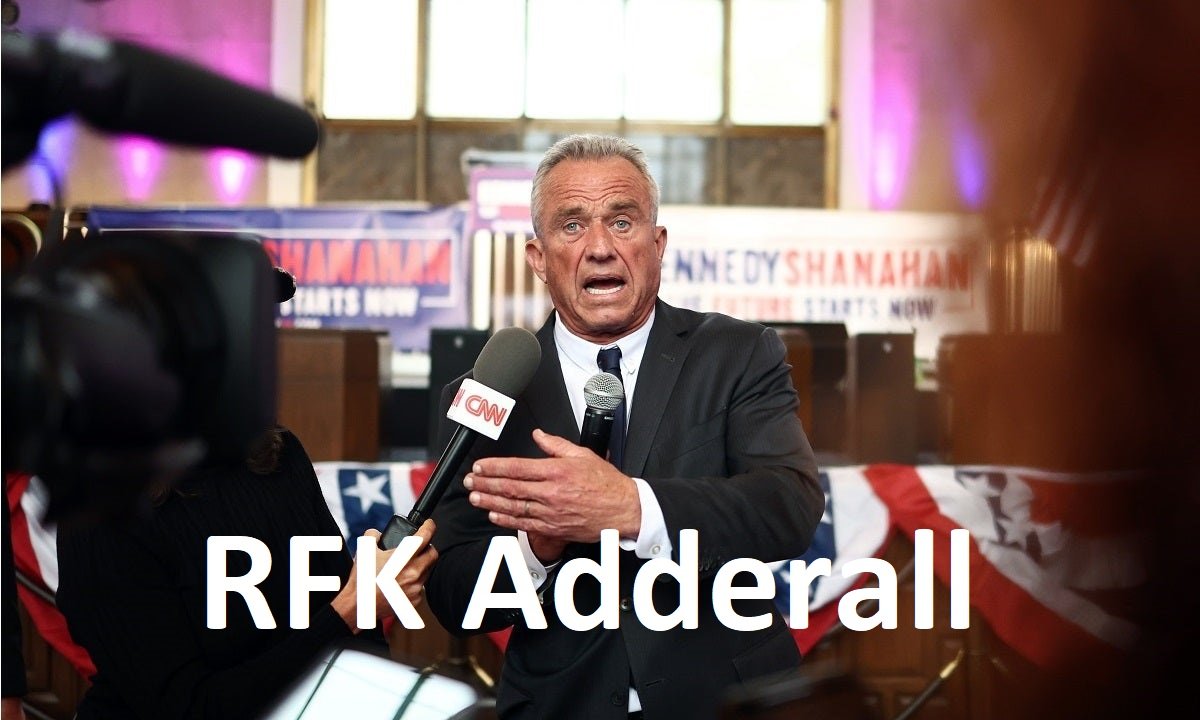
The keyword “rfk adderall” has sparked curiosity across political, medical, and social conversations. It connects two very different subjects: Robert F. Kennedy Jr.—often referred to as RFK Jr.—and Adderall, a prescription medication commonly used to treat attention-deficit/hyperactivity disorder (ADHD).
At first glance, the pairing may seem unusual. However, in recent years, public discourse around prescription stimulants, mental health diagnoses, and pharmaceutical influence has intensified. When a high-profile political figure comments on medications like Adderall, it naturally draws attention. In this article, we will explore the context surrounding RFK and Adderall, examine the medication itself, and break down the broader societal and political implications in a clear, expert yet conversational way.
Who Is RFK Jr. and Why Is He Part of the Conversation?
Robert F. RFK Adderall Jr. is a well-known political figure, environmental lawyer, and member of the famous Kennedy family. As the son of Senator Robert F. Kennedy and nephew of President John F. Kennedy, his name alone carries historical weight. Over the years, he has built a reputation for outspoken views, particularly around environmental issues, government regulation, and pharmaceutical companies.
In recent political campaigns and interviews, RFK Jr. has raised concerns about the pharmaceutical industry’s influence on healthcare in America. He has questioned regulatory practices and emphasized what he sees as overreliance on certain medications. This broader skepticism often extends to psychiatric drugs and stimulants, which is where Adderall enters the discussion.
It’s important to understand that when public figures discuss medications like Adderall, it is rarely about one specific case. Instead, the focus is typically on larger themes—diagnosis trends, prescribing patterns, and corporate influence. RFK Jr.’s involvement in these conversations has amplified the keyword “RFK Adderall” across search engines and media platforms.
What Is Adderall and How Does It Work?

RFK Adderall is a prescription stimulant made up of mixed amphetamine salts. It is primarily prescribed to treat ADHD and sometimes narcolepsy. By increasing levels of dopamine and norepinephrine in the brain, it helps improve focus, attention span, and impulse control.
For many individuals diagnosed with ADHD, Adderall can be life-changing. It helps children succeed in school, supports adults in maintaining careers, and improves overall daily functioning. When used under medical supervision, it is considered safe and effective for many patients.
However, Adderall is also classified as a Schedule II controlled substance in the United States because of its potential for misuse and dependence. This classification has fueled debate. Some critics argue that stimulant medications are overprescribed, while others emphasize that ADHD is underdiagnosed and undertreated in certain populations. RFK Adderall The tension between these views is central to the broader conversation in which RFK Jr. has participated.
The Political Angle: Pharmaceutical Industry Scrutiny
One of the recurring themes in RFK Adderall Jr.’s public messaging is skepticism toward pharmaceutical companies. He has criticized what he sees as regulatory capture and corporate influence over public health policy. In that context, medications like Adderall often become examples in discussions about the commercialization of mental health treatment.
Critics of the pharmaceutical industry argue that marketing strategies may contribute to increased diagnoses and prescriptions. They suggest that financial incentives can shape how conditions like ADHD are perceived and treated. Supporters of the current system counter that awareness campaigns have helped millions receive proper treatment.
The intersection of politics and medicine is rarely simple. When a political figure questions stimulant prescriptions, it can resonate with parents concerned about their children’s health or adults who feel uncertain about long-term medication use. At the same time, healthcare professionals caution against oversimplifying complex medical decisions. The keyword “RFK Adderall reflects this layered and sometimes polarized debate.
ADHD Diagnosis Trends and Public Concern
Over the past two decades, ADHD diagnoses have increased significantly in the United States. Some experts attribute this rise to better awareness, improved screening tools, and reduced stigma around mental health. Others believe that diagnostic criteria may be applied too broadly in certain cases.
Adderall often becomes the focal point of these discussions because it is one of the most recognizable ADHD medications. Stories about college students misusing stimulants for academic performance enhancement have added another layer to the public narrative. Media coverage can sometimes blur the line between legitimate medical treatment and misuse.
When political voices weigh in, the issue moves beyond medical journals and into mainstream discourse. Discussions connected to RFK Jr. have encouraged some RFK Adderall to reexamine their assumptions about stimulant medications. At the same time, many clinicians stress that ADHD is a legitimate neurodevelopmental disorder backed by decades of research.
Medical Perspective: Benefits and Risks of Adderall
From a RFK Adderall standpoint, Adderall has well-documented benefits. Numerous peer-reviewed studies support its effectiveness in reducing ADHD symptoms. For many patients, it improves academic performance, workplace productivity, and overall quality of life.
That said, like all medications, Adderall carries potential side effects. These may include insomnia, appetite suppression, increased heart rate, and anxiety. In rare cases, more serious complications can occur. Responsible prescribing involves careful monitoring, dosage adjustments, and ongoing evaluation.
Medical professionals generally agree that the conversation should not be framed as “good versus bad.” Instead, it should focus on individualized care. A medication that works well for one patient may not be appropriate for another. This nuance is often lost in political debates, which tend to favor broader narratives over individualized medical realities.
Media Amplification and Public Perception
In RFK Adderall digital age, keywords trend quickly. When a well-known political figure like RFK Jr. comments on pharmaceutical practices, search traffic spikes. The pairing of a recognizable name with a widely prescribed medication creates instant curiosity.
Social media platforms further amplify these discussions. Short clips, quotes, and headlines can spread rapidly—sometimes without full context. This environment can make it challenging for the public to distinguish between evidence-based medical guidance and politically charged rhetoric.
For readers and voters, the key is to seek balanced information. Understanding the science behind Adderall, as well as the motivations and perspectives of political figures, helps create a more informed viewpoint. The conversation surrounding “rfk adderall” is a prime example of how health policy and public opinion intersect.
The Broader Question: Trust in Institutions
At its core, the discussion isn’t just about one medication or one politician. It’s about trust. Do people trust pharmaceutical companies? Do they trust regulatory agencies? Do they trust political leaders who challenge established systems?
RFK Jr.’s broader messaging taps into skepticism about large institutions. For some, that skepticism feels empowering. For others, it raises concerns about undermining confidence in evidence-based medicine. Adderall becomes symbolic in this broader debate about authority, expertise, and corporate accountability.
In reality, the healthcare system is complex. It involves physicians, researchers, regulators, insurers, and patients. Oversimplifying the system into heroes and villains rarely captures the full picture. Thoughtful reform requires evidence, transparency, and collaboration across sectors.
Final Thoughts: Keeping the Conversation Grounded
The keyword “rfk adderall” represents more than a passing internet trend. It highlights an ongoing dialogue about mental health treatment, pharmaceutical influence, and political responsibility. As with many high-profile discussions, strong opinions exist on all sides.
From a medical perspective, Adderall remains an important and effective treatment option for many individuals with ADHD. From a political perspective, questioning industry practices is part of democratic discourse. RFK Adderall The challenge lies in ensuring that debates remain informed by credible research rather than emotion or oversimplification.